


Ever looked at your electricity bill and wondered if your energy efficient home computer is silently draining your wallet?
According to recent studies, the average home computer setup can consume between 200-500 kWh per year. That’s a lot.
(Statistics ref: Statista.com)
The shock of that news led me on a journey toward desktop vs laptop for home considerations and creating a truly efficient system with proper computer power management.
In this guide, I’ll share everything you need to know about reducing your computer’s power consumption, without sacrificing performance.
Whether you’re environmentally conscious or simply looking to cut costs, these energy-saving strategies will transform your home computing experience!
IN THIS GUIDE
Understanding Computer Energy Consumption Basics
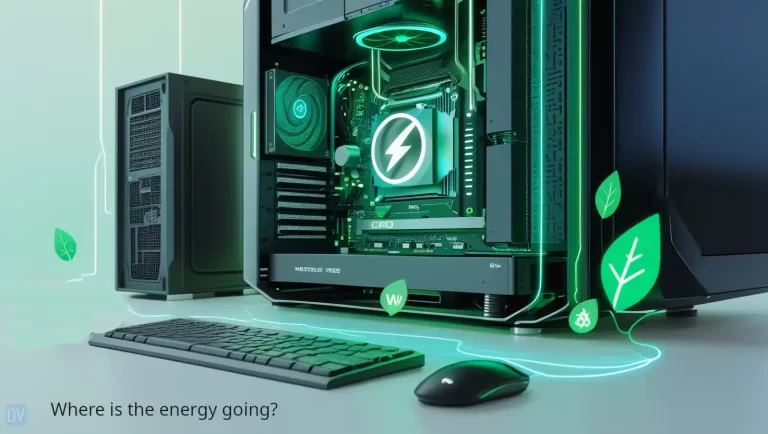
When I first started learning about computer energy usage reduction, I was shocked to discover just how much electricity my setup was consuming.
A typical desktop computer can use anywhere from 60 to 300 watts of power when active. That’s a huge range!
Energy conscious computing begins with understanding where all that power goes.
In my experience, the biggest power consumers in any system are the processor and graphics card. These components can account for over 50% of your computer power consumption tracking numbers!
Did you know that an inefficient power supply can waste up to 30% of the electricity it draws? I learned this the hard way after installing my first computer power draw measurement device.
The monitor was my next surprise – my old 27-inch LCD was using almost as much power as the computer itself during peak usage!
What’s truly eye-opening is the environmental impact. A single computer running 8 hours daily can generate around 175 kg of CO2 annually. I started researching green computing practices to reduce my carbon footprint when I found this out.
Many people believe that screen savers save energy – they don’t! In fact, they keep your computer running.
Another common misconception is that frequently turning your computer on and off uses more energy than leaving it running. Today’s computers are designed for frequent power cycles, and power-smart computing means shutting down when not in use.
Choosing Energy Efficient Computer Components
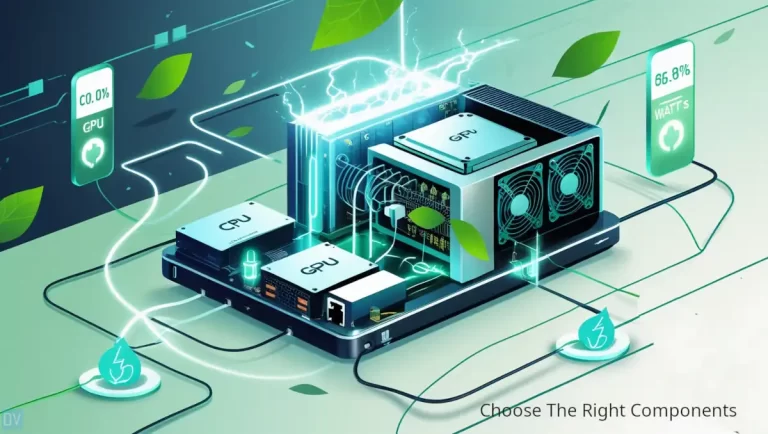
The heart of any energy efficient computer components strategy starts with the processor. After years of building computers, I’ve found that looking at the TDP (Thermal Design Power) rating gives you the best indication of energy use.
Modern processors like AMD’s Ryzen series and Intel’s 13th generation chips offer impressive performance-to-power ratio options.
Making the switch to an efficient processor will show up in electricity cost reduction computing results almost immediately.
For graphics, unless you’re a serious gamer or video editor, consider integrated graphics instead of dedicated GPUs.
If you do need a separate graphics card, look for power efficient graphics cards with features like dynamic power states. These can reduce consumption by up to 50% during light tasks.
Storage choices make a surprising difference too. Swapping out a mechanical hard disk (HDD) drive for a Solid State Drive (SSD), not only improves performance but also reduces power consumption by about 5-7 watts.
While that might not sound like much, over a year of daily use, these power-saving computer hardware decisions add up!
The most overlooked component might be the power supply. Always choose a model with at least 80 Plus Gold certification.
Moreover, a higher efficiency means less electricity wasted as heat, resulting in a cooler and quieter system.
RAM generally doesn’t consume much power, but still look for modules with good computer component efficiency ratings. DDR5 memory typically uses less energy than older standards while providing better performance.
For motherboards, features like efficient voltage regulators and power-optimized computer build options in the BIOS can make a significant difference. Some newer motherboards even include dedicated energy monitoring chips to help you track consumption in real-time.
Optimal Monitor Selection for Energy Conservation

My journey toward an energy efficient home computer wouldn’t be complete without addressing the monitor – often the second-highest power consumer in your setup. I’ve tested numerous displays over the years and found the technology makes a huge difference in energy use.
LED monitors use significantly less power than older CCFL-backlit LCD models.
When I upgraded to an energy star rated LED monitor, my display’s power consumption dropped by almost 40%! For even greater electricity saving computer tips, consider OLED technology, which can be more efficient when displaying darker content.
One lesson I learned: bigger isn’t always better for energy saving monitor setups.
A 24-inch monitor typically uses about 20-30% less power than a 32-inch model with the same technology. If you need screen real estate, sometimes two smaller, energy-efficient monitors use less power than one massive display.
The brightness setting is your most immediate control over monitor energy use. I keep mine at about 40% brightness for most tasks, which still provides plenty of visibility while significantly reducing power draw. Most people set their brightness way too high out of habit!
Technologies like adaptive sync (G-Sync or FreeSync) don’t just improve gaming.
They can contribute to your sustainable computing habits by reducing unnecessary frame rendering and the associated power costs.
Some newer monitors also feature ambient light sensors that automatically adjust brightness based on room conditions, further optimizing energy use.
Remember to check for certifications like ENERGY STAR and TCO when shopping for a new display. My current monitor is TCO Certified, which means it meets strict environmental friendly computing standards for both energy efficiency and responsible manufacturing.
Power Management Software and Settings
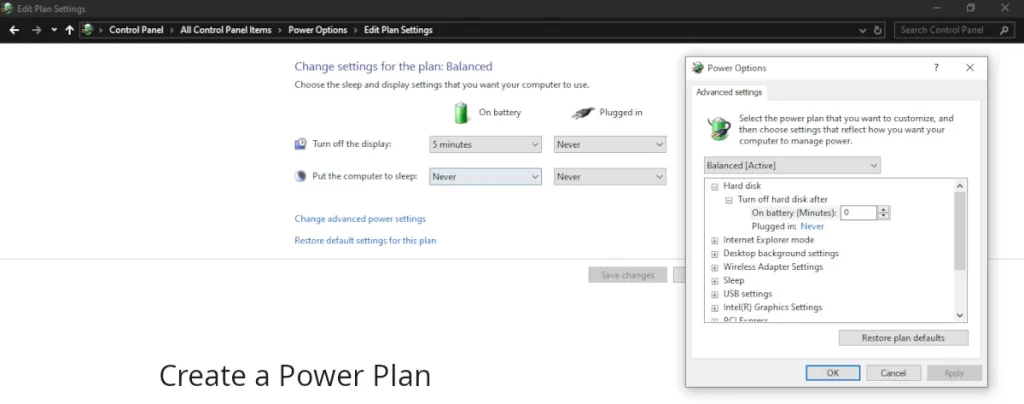
After getting the hardware right, I discovered that software plays an equally important role in creating an energy efficient PC. Both Windows and macOS come with built-in power management tools that most users never fully explore.
I spent an afternoon tweaking my energy saving computer settings, and the results were impressive.
Simple adjustments like reducing the time before the display turns off and enabling hibernation mode can save considerable energy. My computer now automatically enters deep sleep after 15 minutes of inactivity, using virtually no power until I wake it.
Operating systems like Microsoft Windows have built-in computer power management software. These tools can provide much finer control over when different components power down.
They can also create usage profiles for different scenarios – for instance, maximum performance while gaming but a minimal energy computing setup during web browsing.
Understanding the difference between sleep and hibernate modes will help with not only your energy efficient home computer setup, but understand the features at your disposal better.
Sleep maintains your session in RAM, using a small amount of power, while hibernation saves your session to disk and uses almost no power. For overnight breaks, use hibernate mode as part of your sustainable computing solutions.
Pro tip:
Using Task Manager to identify and disable unnecessary startup programs can result in noticeable improvements in your power-smart computing strategy.
Cooling Solutions That Reduce Power Consumption
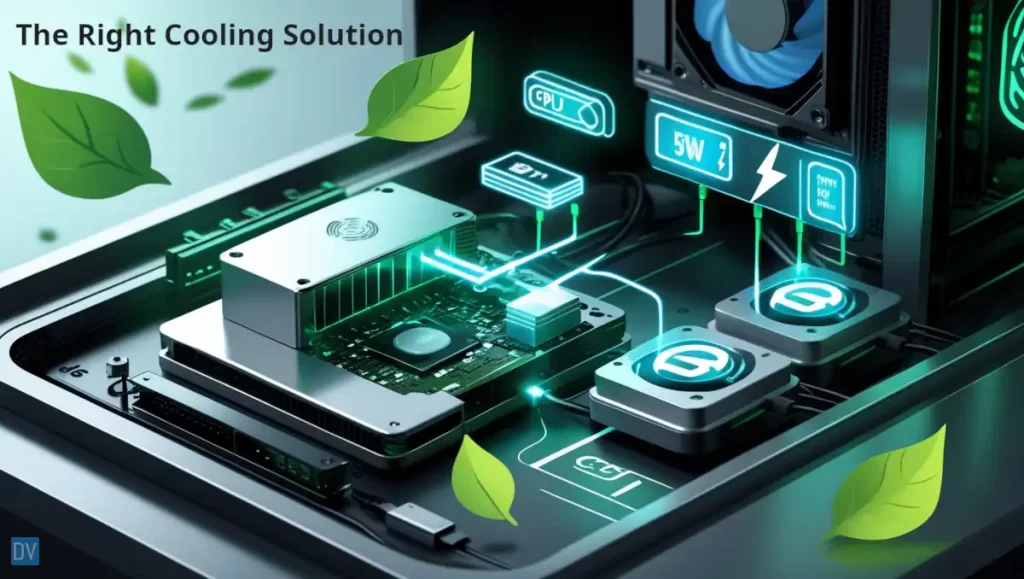
When I first started focusing on efficient computer cooling, I didn’t realize how closely it was tied to energy consumption.
Here’s how it works: better cooling leads to more efficient operation, which means less power wasted as heat.
The first upgrade you should consider is the stock CPU cooler, with a larger, more efficient model. This simple change can reduce processor temperature by 15°C and allow the CPU to maintain higher performance without increasing power draw.
Efficient computer ventilation isn’t just about noise – it’s about energy savings too!
Fan control is another area where I’ve seen big improvements. Most motherboards come with automatic fan controls, but I found that custom fan curves provides a better energy optimized computer setup result.
Set your fans to run at minimal speeds during light tasks, ramping up only when truly necessary.
For those seeking the ultimate in power conservation, passive cooling solutions can eliminate fan power consumption entirely for some components.
I installed a massive passive heatsink on my home server’s CPU, and it runs perfectly silent while using about 8 watts less power than with an active cooler.
The most valuable lesson I learned about cooling and energy efficient home computer design is the importance of airflow. A well-planned airflow path with properly placed intake and exhaust fans can cool components more effectively with fewer fans running at lower speeds.
Case temperature matters too!
I added a simple temperature monitor to my case and discovered that my system was drawing about 5% more power during summer months due to the higher ambient temperature. Now I make seasonal adjustments to my cooling strategy as part of my sustainable computing habits.
Peripheral Selection for Complete Energy Efficiency

My quest for true energy conscious computing didn’t stop with the computer itself. Peripherals can add significant power draw to your overall setup. When I measured my complete system, I was surprised to find that peripherals accounted for nearly 20% of my total power consumption!
Wireless keyboards and mice are convenient but typically require regular battery replacement or recharging. I switched to energy-efficient wired models for my main workstation, saving both power and the hassle of changing batteries. For my portable setup, I chose solar-powered wireless peripherals that rarely need charging.
Printers are notorious power hogs, especially laser models. I replaced my always-on laser printer with an energy efficient peripheral device – an inkjet that automatically powers down when not in use. This alone saved me about 5-7 watts of continuous power draw.
External storage devices vary widely in their energy requirements.
After testing several options, I settled on a low-power SSD-based external drive that uses 70% less power than my old external hard drive. These kinds of power-saving computer setup decisions may seem small, but they compound over time.
The biggest peripheral power-saving tip I discovered was using a smart power strip. This simple device automatically cuts power to peripherals when the computer is off, eliminating phantom power reduction issues.
A smart strip can save an estimated 15-20 watts of continuous standby power.
Audio equipment can be surprisingly power-hungry. I replaced my old amplified speakers with more efficient models that include auto-standby features. Now they only draw significant power when producing sound, contributing to my overall eco-friendly PC build strategy.
Building Habits for Daily Energy Conservation
The final piece of my energy saving computer tips in 2025 involves daily habits. Even the most efficient hardware needs proper usage patterns to maximize savings. This was perhaps the hardest part for me – changing longstanding habits isn’t easy!
Use a power schedule that aligns with your work patterns. Like switch off or hibernate during lunch breaks. Automating power-saving computer modes ensures you’ll never wasting energy unnecessarily.
One habit that made a huge difference was being smarter about when to shut down versus using sleep mode. For breaks under 2 hours, sleep mode makes sense since it uses minimal power but allows quick resumption. For longer periods, complete shutdown provides the best energy efficient PC operation.
Managing power-hungry applications became another focus. I now close resource-intensive applications when I’m not actively using them, particularly browsers with multiple tabs that silently consume power.
Tracking makes a difference!
I installed a simple power meter that helps me maintain computer power consumption tracking and provides immediate feedback about my usage. This visibility has helped me identify power-wasting behaviors I wasn’t even aware of.
Perhaps the most effective habit I’ve developed is regular maintenance.
Cleaning dust from components, updating drivers, and optimizing software all contribute to maintaining efficiency. Every three months, I perform a complete system check to ensure everything is running optimally for power efficient computer operation.
Conclusion
Creating an energy efficient home computer doesn’t mean sacrificing performance or breaking the bank.
By thoughtfully selecting components, optimizing settings, and developing conscious usage habits, you can significantly reduce your computer’s energy footprint.
Start implementing these strategies today to enjoy lower utility bills and the satisfaction of knowing you’re computing more sustainably. Remember, even small changes can add up to significant energy savings over time!
Whether you’re motivated by environmental concerns, reducing electricity costs, or simply extending the life of your equipment, the journey toward energy efficient computing is worthwhile.
My own experience has shown that an efficient computer runs cooler, quieter, and often faster than an inefficient one – truly a win-win situation.
I hope this guide helps you on your path to creating a more sustainable tech setup. Start with one area that interests you most, implement those changes, then move on to the next. Before long, you’ll have transformed your energy-hungry computer into a model of efficiency!
Still have more questions?
Check out what others have asked below or search my other articles.
FAQ
Which computer consumes less electricity?
A laptop is more power-efficient than a desktop computer.
Do home computers use a lot of electricity?
The amount of electricity a computer consumes can vary based on the type of computer, its usage, and the hardware components. A typical computer wcan use about 80-250 watts per hour.
Is this considered to be a lot?
While in operation, a computer consumes less power than devices like a printer or microwave. However, since computers are usually on for much longer periods, their total energy consumption over time tends to be high.
How much electricity does a PC use in 24 hours?
This will vary from setup to setup, depending on the installed components. On average,a computer can use between 1.44 kWh and 7.2 kWh.
How much does a computer add to an electric bill?
This will vary from setup to setup. On average, the monthly cost to run a laptop is roughly $2.50, and a desktop is roughly $19.50.
Is it OK to use a PC for 24 hours?
A desktop computer can be used for 24/7 operation. Ensure that the machine is well ventilated to run at the optimum temperature for best performance.


